More audio than anyone can hear
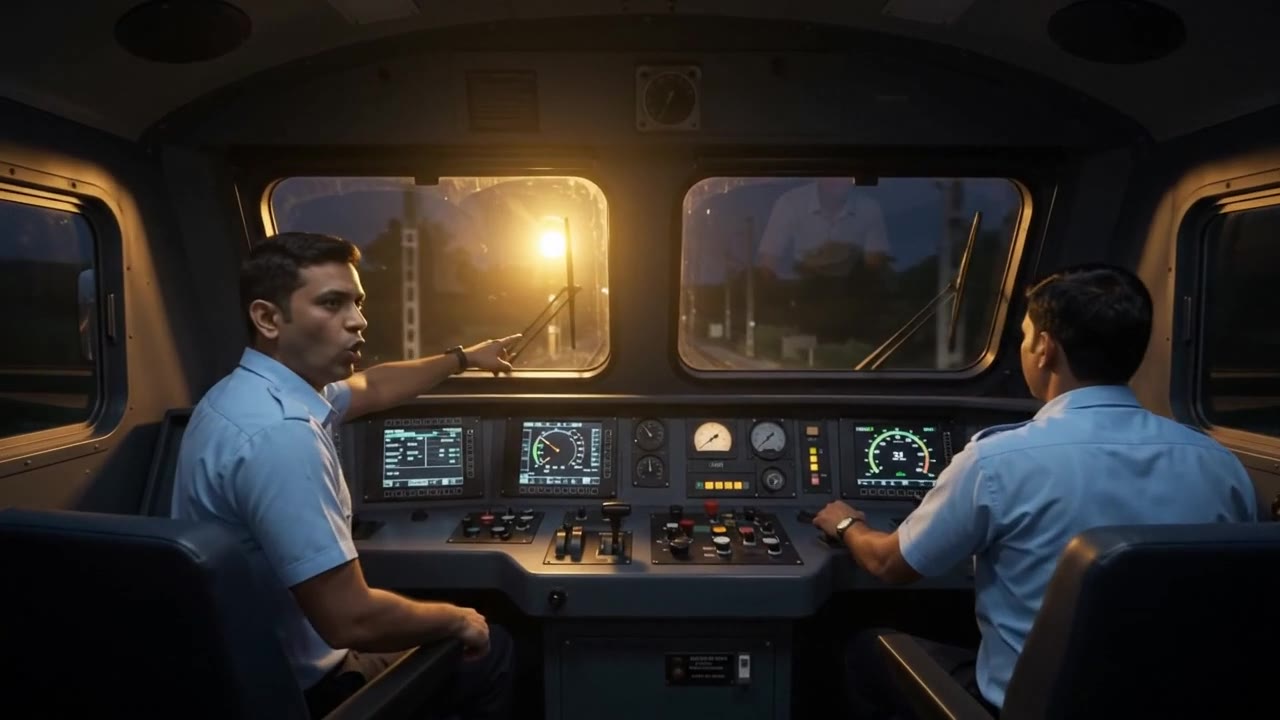
Every trip leaves hours of cab conversation behind. Across divisions it grows faster than any supervisor can listen to it.
Indian Railways · Cab communication intelligence
Railcomm turns recorded loco-cab audio into searchable transcripts, rule-based safety checks and division-wide insight, so supervisors spend their time on the conversations that matter.
Time-aligned transcriptsClick a line, hear that second.
Rule-based checksEvery finding names its rule.
Role-based accessEach user sees only their scope.
Already a customer? Log in
 Call-out confirmed
Journey review
Needs attentionIllustrative example, not real crew data
Why it is needed
Signal call-outs, acknowledgements and cautions are the crew's shared safety net. They are also recorded, but a recording nobody can search is evidence nobody can use.

Every trip leaves hours of cab conversation behind. Across divisions it grows faster than any supervisor can listen to it.
When review means picking a few files at random, the call-out that was never acknowledged is found only if someone happened to press play on it.
What counts as a good cab conversation differs from one reviewer to the next, so nobody can say whether a section, a shift or a division is improving.
What we provide
Railcomm is one workspace that takes cab audio from upload to review, with the original recording always one click away.
Divisions upload cab recordings (WAV, MP3, M4A, FLAC, AAC, OGG) with the trip details. Train, loco, pilot and section are read straight from the file name.
Each recording is shown with a time-aligned transcript. Click any line and the audio jumps to that second.
Every line is sorted into one of five classes, and the journey is checked for call-outs, acknowledgements, distraction, phone use, silences and red flags.
The dashboard points to the journeys that deserve a listen, the trends worth a conversation, and the evidence needed to follow up.
Inside a journey review
Instead of an all-or-nothing “relevant / irrelevant” split, each line lands in one of five classes. Noisy audio is set aside rather than counted against the crew.
Operational · Signals, speeds, brake tests, authority, loco health
Off-duty · Personal, social and phone talk
Red flag · Bypassed safety devices, admitted fatigue or overspeed
Unclassified · Speech that matches no rule either way
Not assessable · Too noisy or too short to judge fairly
Journey review
Rule checks
Built for the modern fleet
The value it brings
Better safety communication is not about catching people out. It is about making good practice visible, and risk easy to see early.
Loco pilots and assistants
Crew supervisors and CLIs
Division and zonal officers
Safety and vigilance
Without it
With Railcomm
Built to be trusted
Recordings are used for coaching and, where needed, for disciplinary follow-up. So the platform shows its reasoning, protects access and never decides on its own.
From a line to the record
Line flagged
Off-duty talk at 00:31:40, with the audio one click away
Rule cited
Every finding names the rule it comes from
A person decides
Reviewed by a supervisor, never auto-actioned
Evidence pack sealed
Tamper-evident fingerprint and a sign-off block
Checks are written from Indian Railways cab-conduct rules, and each result shows the rule it rests on.
A printable pack records the rating, the evidence lines, the ruleset version and a SHA-256 fingerprint of the transcript.
Sign-in is required. Super Admins, Admins and Division Users each see only what their role and division allow.
The system flags and explains. People review, decide and sign off. Nothing is concluded automatically.
We would rather you know the limits than discover them.
Get in touch
Share your details and we will reach out to understand your division and show you what Railcomm can do.
You tell us who you are
Name, organisation and how to reach you. That is all we need to start.
We get in touch
We learn about your division, its recordings and what you want to improve.
We show you the platform
A walk-through of the dashboard, transcripts and compliance checks, and a talk about next steps.
Already a customer? Go straight to your workspace.
Log inIt takes about a minute.